

Orthopedic Surgery vs Physiotherapy: Which Is Better?
Orthopedic Surgery vs Physiotherapy: Which Is Better?
Many people find that their first sign of a joint problem isn’t a constant ache, but a sharp sting when taking the first step up a flight of stairs. Knee pain while climbing stairs can turn a simple trip to the second floor or a walk in a public park into a daunting task. For those living in busy urban areas like Ahmedabad, where navigating multi-story buildings and bustling markets is part of daily life, this discomfort can quickly limit your independence and productivity at work.
When your knee hurts during elevation, it often indicates that the joint is struggling to handle the increased pressure of your body weight. This issue doesn’t just affect your fitness; it impacts how you interact with your environment. You might find yourself searching for elevators, avoiding overhead bridges, or feeling hesitant to carry groceries.
Ignoring these early warning signs can lead to compensatory movements that eventually cause pain in your hips or lower back.
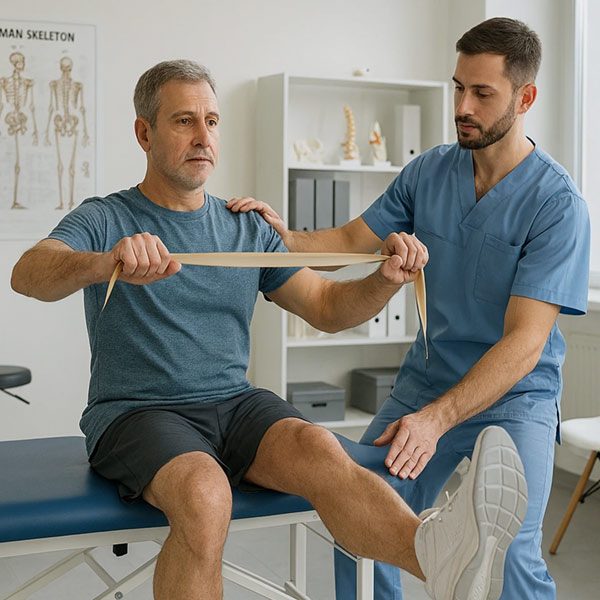
What Is Physiotherapy and How It Helps Recovery
Physiotherapy is often the “first line of defense.” It is a non-surgical treatment that focuses on:
- Strengthening muscles: Stronger muscles take the pressure off your painful joints.
- Improving flexibility: Helping you move your arms or legs more freely.
- Pain management: Using heat, cold, or gentle electrical pulses to reduce swelling.
For many in Ahmedabad, starting with a 6 to 8-week physiotherapy plan can often delay or even prevent the need for more invasive treatments.
When Orthopedic Surgery Becomes Necessary
While we all want to avoid the operating room, surgery is sometimes the only way to restore your quality of life. Doctors usually recommend surgery when:
- The bone is badly fractured and cannot heal straight on its own.
- A ligament (like the ACL in the knee) is completely torn and makes the joint unstable.
- Advanced arthritis has destroyed the “cushion” in your joint, making walking impossible.
Nonsurgical treatments have failed to provide relief after several months.
Key Differences Between Surgical and Non-Surgical Treatment
The main difference is how the healing happens. Physiotherapy helps your body heal itself by building strength. Surgery “mechanically” fixes the problem—like sewing a tendon back together or putting in a new metal joint.
Real Patient Scenario: Imagine a 45-year-old office worker with mild back pain. They likely need physiotherapy to fix their posture. Now, imagine a 20-year-old football player with a snapped knee ligament. They will likely need surgery to ever play again.
Benefits and Limitations of Physiotherapy
Benefits:
- No risk of infection from incisions.
- Much lower cost compared to hospital stays.
- No need for general anesthesia.
Limitations:
- Requires a lot of time and daily effort from the patient.
- May not work for severe structural damage (like a crushed bone).
Recovery Time and Long-Term Results Comparison
Feature | Physiotherapy | Orthopedic Surgery |
Initial Recovery | Immediate (No downtime) | 2–6 weeks (Rest required) |
Full Results | 3–6 months of consistency | 6–12 months for full strength |
Risk Level | Very Low | Moderate (Infection/Anesthesia) |
Cost | Budget-friendly | Higher (Hospital/Implant costs) |
Advantages of Modern Orthopedic Surgical Techniques
In 2026, surgery is not what it used to be. Modern techniques like Arthroscopy (keyhole surgery) and Robotic Joint Replacement mean:
- Tiny cuts instead of large scars.
- Less blood loss and pain.
- Faster discharge from the hospital (sometimes in just 24 hours).
How Doctors Decide the Best Treatment Approach
Your doctor won’t just guess. In a typical Ahmedabad clinic, the decision is based on:
- Imaging: X-rays and MRI scans show the physical damage.
- Activity Level: A professional athlete needs a different plan than someone who prefers reading at home.
- Age and Health: Younger patients heal faster, while older patients might need surgery to stay mobile and independent.
When You Should Consult an Orthopedic Specialist
Don’t wait until you can’t walk. You should book a consultation if:
Your joint "locks" or feels like it's giving way.
Pain keeps you awake at night.
You see visible swelling or a deformity after an injury.
You have tried rest and painkillers for two weeks with no improvement.
Expert Advice from Orthopedic Specialist
A successful recovery depends on an accurate diagnosis. Modern medicine in 2026 emphasizes “Pre-habilitation”—doing physiotherapy before surgery to make the body stronger. This ensures that even if you choose surgery, your recovery is twice as fast. Always ensure your specialist uses the latest MRI technology to see the full picture before deciding on a treatment path.