

When Is Knee Replacement Needed? Signs, Safety, Age and Recovery
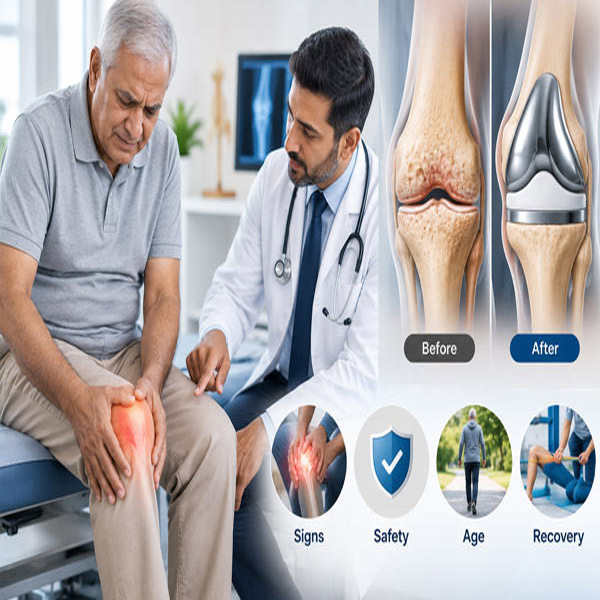
How Doctors Assess Knee Pain Before Recommending Surgery
Living with chronic knee pain can make simple daily activities feel like a huge challenge. Whether it is walking to the market, climbing stairs, or simply standing up from a chair, joint pain can limit your independence. Many patients visit our clinic wondering, when is knee replacement needed? This is one of the most common questions we hear, and the answer depends on several factors, including your pain level, joint damage, and how much your lifestyle is affected.
If you are looking for knee pain treatment in Ahmedabad, understanding the signs and treatment options is the first step toward relief.
When is knee replacement generally considered?
Knee replacement is needed when severe joint damage—usually from arthritis—causes chronic pain that limits daily activities. Surgery is normally considered only after a proper examination, X-ray imaging, and the failure of suitable non-surgical treatments like medications, physiotherapy, or injections to provide adequate relief.
What Is Knee Replacement Surgery?
Knee replacement surgery, also known as knee arthroplasty, is a medical procedure designed to replace the weight-bearing surfaces of a damaged, worn, or diseased knee joint. The goal of this surgery is to relieve pain and restore mobility. During the procedure, the damaged bone and cartilage are carefully removed from the thigh bone (femur), shin bone (tibia), and sometimes the kneecap (patella). These are then replaced with artificial components made of high-quality metal alloys, medical-grade plastics, and polymers.
This procedure is highly effective for patients suffering from severe osteoarthritis, rheumatoid arthritis, or post-traumatic arthritis. As a proven joint pain treatment in Ahmedabad, this surgery helps thousands of patients regain their ability to walk smoothly and enjoy life without constant discomfort. It is not just about replacing the joint; it is about restoring your quality of life.
When Is Knee Replacement Needed?
Deciding when is knee replacement needed is a deeply personal and medical decision. There is no exact formula or specific moment that applies to everyone. However, the primary reason to consider this surgery is when your knee pain significantly reduces your quality of life. For example, if you find yourself unable to participate in family gatherings, struggling to perform your job, or unable to sleep at night due to pain, it may be time to consult a specialist.
Knee replacement is typically recommended for patients who have severe, advanced arthritis. When the protective cartilage in the knee joint wears away completely, the bones begin to rub directly against each other. This causes extreme friction, inflammation, stiffness, and pain. It is important to remember that knee replacement is an elective surgery. This means you and your doctor decide together when the time is right, based on your symptoms and how much the condition affects your daily living. Living with untreated severe joint damage can lead to muscle weakness and further complications over time. Taking action early can help preserve your overall mobility.
Seven Signs You May Need Knee Replacement
Recognizing the symptoms of severe joint damage can help you seek timely medical advice. Here are seven common signs that indicate you might need a knee replacement:
- Severe Pain That Limits Daily Activities: If everyday tasks like walking a short distance, climbing a single flight of stairs, or getting in and out of a car cause severe pain, your knee joint may be heavily damaged. This is often the most noticeable sign.
- Chronic Inflammation and Swelling: While mild swelling can occur after a long walk, chronic swelling that does not improve with rest, elevation, or medication is a sign of severe inflammation and structural damage inside the joint.
- Pain While Resting or Sleeping: If your knee hurts even when you are sitting quietly or if the pain frequently wakes you up at night, the arthritis has likely reached an advanced stage where rest no longer provides relief.
- Visible Knee Deformity: As the cartilage wears down unevenly, your knee may start to bow outward or bend inward. This physical deformity is a strong indicator of severe joint deterioration that usually requires surgical correction.
- Stiffness and Reduced Mobility: If you are unable to bend or straighten your knee completely, it severely affects your ability to walk naturally. Severe stiffness that lasts all day and makes routine movements difficult is a major warning sign.
- Failure of Non-Surgical Treatments: If you have tried medications, joint injections, and physiotherapy for several months without experiencing any meaningful or lasting relief, surgery may be the next logical step in your treatment plan.
- Dependence on Mobility Aids: If you rely heavily on a cane, walker, or wheelchair just to get around your home safely because of knee pain, a replacement procedure might help you regain your independence and improve your quality of life.
Which Knee-Pain Treatments Should Be Tried Before Surgery?
Before considering surgery, it is essential to exhaust all non-surgical options. A responsible surgeon will always evaluate non-operative treatments first. Finding the best doctor for knee pain in Ahmedabad means finding someone who creates a step-by-step treatment plan tailored to your condition, rather than rushing straight into the operating room.
Common treatments to try before surgery include:
- Lifestyle Modifications: Losing excess weight reduces the mechanical stress on your weight-bearing joints significantly. Modifying your daily activities to avoid high-impact movements can also help protect the joint.
- Physical Therapy: Strengthening the muscles around your knee provides better support and stability for the joint. A guided program of knee-pain exercises can improve flexibility, reduce stiffness, and minimize pain.
- Medications: Over-the-counter anti-inflammatory drugs can reduce swelling and pain. Prescription medications may also be used for more severe, ongoing inflammation under medical supervision.
- Joint Injections: Corticosteroid injections can provide temporary relief from severe inflammation, while lubricating injections act as a cushion for the joint, helping it move more smoothly.
- Assistive Devices: Using a knee brace can provide external support, while a walking cane can help take the pressure off the damaged side of your knee during movement.
How Does a Doctor Confirm That Knee Replacement Is Required?
To confirm that knee replacement is the right choice, your orthopedic surgeon will perform a comprehensive medical evaluation. This detailed process involves several important steps. First, your doctor will take a complete medical history to fully understand your pain levels, functional limitations, and overall general health. They will ask how long you have experienced the pain and what treatments you have already tried.
Next, a thorough physical examination will be conducted. The doctor will check your knee for swelling, tenderness, range of motion, structural alignment, and overall joint stability. Finally, imaging tests are absolutely crucial for a proper diagnosis. X-rays are the most common and effective tool used to confirm the condition. They clearly show the extent of cartilage loss, bone damage, and any bone spurs that have formed over time. In some complex or unclear cases, an MRI may be required to get a detailed view of the soft tissues, ligaments, and tendons. Only after this complete and careful evaluation will a doctor formally recommend knee replacement surgery in Ahmedabad.
Is Knee Replacement Safe?
Many patients understandably worry about the risks of major surgery and ask, is knee replacement safe? The simple answer is yes. Knee replacement is one of the most successful, thoroughly researched, and frequently performed orthopedic procedures in the world. Advancements in modern surgical techniques, improved anesthesia protocols, and high-quality durable implants have made the procedure incredibly safe and highly reliable for the vast majority of patients.
However, like any major surgical procedure, it does carry some inherent risks. Potential complications include infection, blood clots, joint stiffness, and rare nerve damage. To minimize these risks, your medical and surgical team will take extensive precautions. You will be given antibiotics before and after surgery to prevent infection and blood thinners to prevent dangerous clots from forming. Choosing an experienced, board-certified surgeon and strictly following all pre-operative and post-operative instructions will further ensure a safe procedure and a smooth, uncomplicated recovery.
What Is the Best Age for Knee Replacement Surgery?
Patients often ask, what is the best age for knee replacement surgery? The truth is, there is no strict age limit or “perfect” age for this procedure. While the majority of patients who undergo knee replacement are between the ages of 50 and 80, the medical decision is based entirely on the patient’s pain level, joint disability, and overall medical health, rather than their chronological age alone.
Younger patients may need the surgery due to severe traumatic injuries, genetic conditions, or inflammatory diseases like rheumatoid arthritis, while older adults may need it for standard age-related wear and tear (osteoarthritis). Age alone does not determine eligibility. Your overall physical health, the specific severity of the joint damage, the intensity of your daily pain, and how much the condition limits your necessary daily activities are the most important factors. The primary goal is to perform the surgery when it will safely provide the most significant benefit to your overall quality of life.
Total, Partial and Minimally Invasive Knee Replacement
When planning your surgery, your doctor will carefully discuss the different types of procedures available based on the exact location and severity of your specific joint damage.
- Total Knee Replacement: In a total knee replacement, the entire surface of the knee joint is replaced. This is the most common procedure and is necessary when arthritis heavily affects multiple areas of the knee. For patients seeking total knee replacement surgery Ahmedabad, this offers a highly effective, comprehensive solution for severe arthritis.
- Partial Knee Replacement: If your arthritis is strictly limited to just one part (or compartment) of the knee, you may be a candidate for a partial knee replacement. In this procedure, only the damaged section is replaced, which preserves much more of your natural bone, healthy cartilage, and stabilizing ligaments.
What Is the Recovery Time After Knee Replacement?
Understanding the expected recovery time after knee replacement is incredibly important for planning your post-surgery life and support needs. Recovery requires patience, dedication, and active, consistent participation in physical therapy. The timeline can naturally vary from person to person based on age and health, but most patients follow a predictable path of progressive healing.
Here is a general timeline of what you can expect during your recovery journey:
| Recovery Phase | Timeline | What to Expect |
|---|---|---|
| Hospital Stay | 1 to 3 Days | Pain management, standing up, and taking first steps with a walker or crutches. |
| Early Home Recovery | Weeks 1 to 3 | Managing swelling, wound care, and performing gentle bending and strengthening exercises. |
| Active Physiotherapy | Weeks 4 to 6 | Transitioning to a cane, increasing walking distance, and working on muscle strength. |
| Return to Regular Activities | Weeks 7 to 12 | Driving (if approved by your doctor), returning to desk work, and resuming normal daily routines. |
| Full Healing | 6 to 12 Months | Achieving maximum strength, flexibility, and comfort in the replaced joint. |
While the initial healing recovery takes a few weeks, it takes several months to experience the absolute full benefits of the surgery. Regular, guided physiotherapy is the key to achieving a successful and functional recovery.
When Is Revision Knee Replacement Required?
While most modern knee implants are highly durable and last for 15 to 20 years or more, they can occasionally fail over time due to daily physical wear and tear. When this happens, a second surgery is needed to carefully remove the old implant and replace it with a new, secure one. This specialized procedure is known as a revision knee replacement.
Revision surgery is typically required if the original implant becomes physically loose from the bone, if the plastic spacer components wear out, if there is a recurrent infection in the joint, or if the knee becomes unstable during movement. This procedure is significantly more complex than a primary knee replacement. Therefore, it is important to consult a highly skilled revision knee replacement surgeon Ahmedabad who has specific, extensive experience in handling complex joint reconstruction. If you are experiencing new pain, swelling, or instability in a previously replaced knee, you should promptly seek a medical evaluation for advanced revision joint replacement in Ahmedabad.
What Affects Knee Replacement Cost in Ahmedabad?
Many patients understandably inquire about the financial aspects of the surgery during their initial consultation. The knee replacement cost in Ahmedabad is not fixed and varies based on several important and distinct factors.
First, the specific type and brand of implant used plays a major role; imported, high-flexion, or highly specialized revision implants will cost more than standard options. Second, your choice of hospital, room category (such as general ward versus private room), and the facility’s technological equipment (like computer navigation or robotics) will significantly impact the total hospital bill. Finally, the specific experience and surgical expertise of the medical team also contribute to the overall fees. We firmly believe in complete transparency and help our patients understand all these factors during their consultation so there are no surprises. For a detailed, comprehensive breakdown of what influences the pricing and how to plan financially, please read our complete knee replacement cost in Ahmedabad guide.
How to Choose a Knee Replacement Surgeon in Ahmedabad
Choosing the right medical professional is undoubtedly one of the most critical steps in your treatment journey. When looking for a Knee Replacement Surgeon in Ahmedabad, you should carefully consider their specific educational background, volume of surgical experience, and overall patient communication style.
A reliable, trustworthy surgeon will take the time to answer all your questions, explain the risks and benefits clearly, and not pressure or rush you into making a surgical decision. Look for a doctor who specializes specifically in joint replacements and performs these exact procedures frequently. Furthermore, seeking a joint replacement surgeon in Ahmedabad who prioritizes conservative, non-surgical treatments first shows a true commitment to overall patient well-being rather than just rushing to the operating room. Mutual trust and feeling comfortable with your medical team are essential for a smooth surgical experience and a positive recovery.
Knee Replacement Consultation for Paldi, Science City and Nearby Areas
If you are suffering from chronic joint pain and looking for expert, compassionate medical advice, we are here to actively help you. Dr. Mitul Patel is an experienced orthopedic specialist proudly operating out of two convenient, fully equipped clinic locations in Ahmedabad: Paldi and Science City.
If you are seeking a knee replacement specialist in Paldi, you can easily visit our centrally located clinic for a thorough and complete evaluation. For patients living in the surrounding western neighborhoods—if you are currently searching for a Knee Replacement Surgeon in Satellite, Bopal, or Thaltej—you can easily visit either our Paldi or Science City clinic for your consultation. Whether you need a Joint Replacement Surgeon in Satellite area or general joint pain advice, our dedicated clinics are fully equipped to provide comprehensive, highly personalized care for your long-term joint health.
Conclusion
Deciding when is knee replacement needed is a highly significant step toward reclaiming your active, independent lifestyle. If chronic knee pain is holding you back from doing the things you love, and non-surgical treatments are no longer effective, surgery might be the right medical solution. Remember that every patient’s journey is unique, and a proper, detailed medical evaluation is absolutely vital before making any decisions. To carefully discuss your symptoms, review your treatment options, and determine whether surgery is the right path for you, book a knee consultation with Dr. Mitul Patel today. Let us help you take the first step toward better joint health and improved mobility.
Disclaimer: The medical information provided in this article is for educational and informational purposes only and does not substitute for professional medical advice, formal diagnosis, or actual treatment. Suitability for knee replacement and the expected recovery process differ for every single patient based on their individual health conditions. Always consult a qualified healthcare provider for a personalized medical
Frequently Asked Questions
When is knee replacement needed?
Knee replacement is typically needed when severe joint damage, usually from arthritis, causes intense chronic pain that limits daily activities like walking and climbing stairs, and when non-surgical treatments no longer provide relief.
Is knee replacement safe?
Yes, it is generally very safe. It is one of the most common and successful orthopedic surgeries worldwide. While risks like infection and blood clots exist, strict medical protocols are followed to minimize them.
What is the best age for knee replacement?
There is no specific “best” age. Surgery is based on the severity of pain, joint damage, and the impact on daily life, rather than age. Patients in their 50s to 80s commonly undergo the procedure.
How long is the recovery after knee replacement?
Initial recovery takes about 3 to 6 weeks, during which patients can walk with assistance and return to light activities. Full healing, maximum strength, and complete relief can take up to 6 to 12 months.
Can knee replacement be avoided?
In early stages of arthritis, surgery can often be delayed or avoided by managing symptoms through weight loss, physiotherapy, medications, and joint injections. However, severe bone-on-bone arthritis usually requires surgery eventually.
What is the difference between total and partial knee replacement?
A total replacement replaces the entire surface of the knee joint. A partial replacement only replaces the specifically damaged compartment of the knee, preserving healthy bone and ligaments.
Is minimally invasive knee replacement available?
Yes, minimally invasive techniques are available for eligible patients. This approach uses smaller incisions and spares muscle tissue, which can potentially lead to a faster initial recovery and less post-operative pain.
When is revision knee replacement required?
Revision surgery is required if a previous knee implant fails due to wear and tear over time, loosening, instability, or an infection in the joint. It involves replacing the old artificial parts.
What affects knee replacement cost in Ahmedabad?
The cost is affected by several variables, including the type and brand of the implant used, the hospital facility and room category chosen, the surgical technology (like robotics), and the surgeon’s experience.
How do I choose a knee replacement surgeon in Ahmedabad?
Choose a surgeon based on their specialized experience in joint replacements, their credentials, their willingness to explain all options clearly, and their focus on exploring non-surgical treatments before recommending an operation. You can review Dr. Mitul Patel’s qualifications to learn more about our expertise.