

Avascular Necrosis of the Hip: Symptoms, Stages and Treatment Options
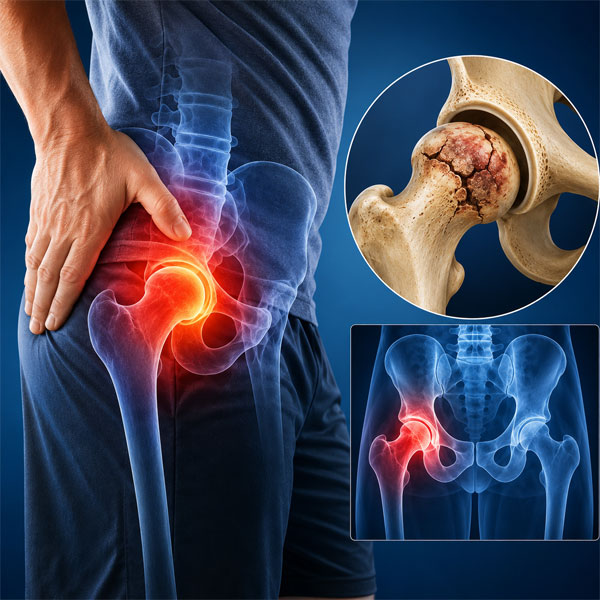
Avascular Necrosis of Hip: Symptoms & Treatment
Experiencing persistent hip or groin pain that makes walking difficult can disrupt your daily life. If this pain worsens over time, it may point to a condition known as avascular necrosis. Exploring options for AVN hip treatment in Ahmedabad can help patients find effective medical and surgical solutions to regain pain-free movement.
Avascular necrosis happens when the blood flow to the ball of the hip joint is significantly reduced, causing the bone tissue to weaken. Finding the right treatment depends on the specific stage of the disease and the overall condition of your femoral head.
While advanced stages often require surgical care, early detection can open up hip-preserving choices. A timely orthopedic consultation ensures that you receive an accurate diagnosis and a clear path forward.
Quick Answer Box
Avascular necrosis (AVN) of the hip is a condition where reduced blood supply causes bone tissue damage in the hip joint. Early diagnosis is crucial to prevent bone collapse and preserve the natural joint. Treatment changes according to the stage; early AVN may respond to core decompression, while advanced stages with joint collapse generally require a total hip replacement.
Healthy Hip vs AVN Hip
Condition | Blood Supply | Bone Condition | Common Symptoms | Joint Movement |
Healthy Hip | Normal and active | Strong and smooth | None | Free and painless |
AVN Hip | Reduced or blocked | Weakening or collapsing | Hip or groin pain | Restricted and painful |
In its very early stages, AVN may not cause any pain. However, as the bone damage progresses, avascular necrosis hip symptoms become more noticeable.
Patients often experience:
- A dull ache or sharp groin pain
- Hip pain that spreads to the thigh or buttock
- Hip pain while walking or putting weight on the leg
- Pain while climbing stairs or standing for long periods
- Reduced hip movement and stiffness
- Limping to avoid putting pressure on the painful joint
- Pain at rest, especially during the night in advanced stages
Please note that symptoms alone cannot confirm AVN, as these signs are similar to other hip problems.
Symptoms and Recommended Actions
Stage of Symptoms | What the Patient May Feel | Recommended Next Step |
Mild / Early | Mild groin pain with heavy activity | Rest and observe; consult if it lasts over a week |
Moderate | Pain while walking or climbing stairs | Schedule an orthopedic evaluation soon |
Severe / Late | Limping, restricted movement, pain at rest | Seek immediate medical attention |
AVN happens when blood flow to the femoral head is interrupted. This can occur due to injuries (traumatic) or health conditions (non-traumatic).
Common causes include:
- Hip fracture or dislocation: A serious trauma can tear or compress the blood vessels feeding the hip.
- Long-term or high-dose steroid use: Taking certain steroid medicines for a long time can increase fat levels in the blood, which may block small blood vessels.
- Heavy alcohol use: Regular, heavy drinking can also cause fatty blockages in blood vessels.
- Medical conditions: Diseases like sickle cell anemia, lupus, or other blood-related disorders can reduce blood flow.
- Previous medical treatment: Radiation therapy can sometimes damage bone blood vessels.
- Unknown causes: In some cases, doctors cannot find a clear cause.
It is important to remember that not everyone with these risk factors will develop AVN.
Who Should Consider an Early Hip Evaluation?
- Patients with unexplained groin pain causes that do not improve with rest.
- Individuals who have recently taken high doses of steroids for other illnesses.
- People with a history of hip trauma, fractures, or dislocations.
- Anyone experiencing sudden difficulty or limping while walking.
Doctors use a staging system (like the Ficat or ARCO classification) to understand how far the disease has progressed. Understanding the AVN stages helps in planning the right treatment.
AVN Progression Stages
AVN Stage | Bone and Joint Condition | X-Ray or MRI Findings | Common Symptoms | General Treatment Direction |
Stage 1 (Early) | Bone starts losing blood supply. No collapse. | X-ray is normal. MRI shows early signs. | Mild or no pain. | Non-surgical care or core decompression. |
Stage 2 (Pre-collapse) | Bone damage begins, but the ball shape is intact. | X-ray shows bone changes (cysts). MRI is clear. | Pain while walking or moving. | Hip preservation surgery. |
Stage 3 (Early Collapse) | Femoral head begins to flatten. Cartilage gets damaged. | X-ray clearly shows femoral head collapse. | Constant pain, limping, stiffness. | Major joint surgery or hip replacement. |
Stage 4 (Post-collapse) | Severe joint collapse. Advanced arthritis develops. | X-ray shows joint destruction. | Severe pain at rest, highly restricted movement. | Total hip replacement. |
Early diagnosis provides the best chance to save the natural hip joint. Your orthopedic doctor will start by taking a detailed medical history and asking about your symptoms, steroid use, and alcohol habits.
Next, a physical examination will check your hip movement test to see which motions cause pain.
Because early-stage AVN may not appear clearly on a standard X-ray, doctors rely on advanced imaging to catch the disease before the bone collapses.
Diagnostic Tests for AVN
| Diagnostic Test | What It Shows | When It May Be Recommended |
| X-ray | Bone shape, cysts, or joint collapse. | Always the first step to check for bone damage. |
| MRI | Early bone marrow changes and exact damaged area. | Used as the main MRI for AVN diagnosis in early stages. |
| Blood Tests | Underlying health conditions or blood disorders. | When searching for non-traumatic causes of AVN. |
The right AVN hip treatment in Ahmedabad depends heavily on the stage of the condition. Doctors select the best approach based on the patient’s age, the size of the damaged bone area, whether the joint has collapsed, and overall health levels.
Non-Surgical Treatment for Early AVN
Early-stage AVN treatment focuses on pain relief and preventing further damage. Options include:
- Activity modification: Avoiding high-impact activities that stress the hip.
- Protected weight-bearing: Using crutches to reduce pressure on the joint, when advised by a doctor.
- Physiotherapy: Gentle exercises to maintain joint movement, guided by a professional.
- Pain management: Specific medicines prescribed by an orthopedic doctor to reduce pain and inflammation.
- Managing underlying conditions: Controlling cholesterol or safely reducing steroid medicines (only under a doctor’s guidance).
Core Decompression for AVN
Core decompression for AVN is a standard surgical procedure for early stages (before the bone collapses).
- Purpose: The surgeon drills one or more small holes into the femoral head.
- How it works: This reduces pressure inside the bone and creates new pathways for blood vessels to grow.
- Recovery: Patients usually need to use crutches for a few weeks to protect the healing bone.
Total Hip Replacement for Advanced AVN
If the femoral head has already collapsed (Stage 3 or 4), hip replacement for AVN is usually the most effective option.
- Purpose: The damaged bone and cartilage are removed and replaced with artificial implants (metal, ceramic, or plastic).
- Goals: This surgery aims to provide long-term pain relief and restore normal joint function.
- Rehabilitation: Post-surgery physiotherapy is vital for a strong recovery.
While modern hip replacement service options offer excellent outcomes, no medical procedure can guarantee permanent results for every single patient.
Understanding your surgical options helps you make informed decisions with your doctor.
|
Factor |
Core Decompression |
Total Hip Replacement |
|
Suitable Stage |
Early stages (Stages 1 and 2). |
Advanced stages (Stages 3 and 4). |
|
Main Goal |
Save the natural bone and improve blood flow. |
Replace the damaged joint to stop severe pain. |
|
Bone Preservation |
Yes, keeps the natural femoral head. |
No, removes the damaged bone entirely. |
|
Type of Procedure |
Minimally invasive drilling. |
Major joint replacement surgery. |
|
General Recovery |
Requires crutches to protect the bone while it heals. |
Early walking is encouraged, followed by physiotherapy. |
|
Possible Limitations |
May not stop the disease; replacement may still be needed later. |
Implants may wear out after 15–25 years. |
|
Patient Suitability |
Younger patients with intact, round hip bones. |
Older patients or those with severe joint collapse. |
Patients often ask about AVN treatment without surgery. Conservative care—such as rest, walking aids, and medicines—is generally used to manage symptoms in the very early stages.
While these methods can reduce your pain, they do not cure the underlying lack of blood supply. Your response to non-surgical treatment depends on how quickly the disease progresses. This is why regular MRI monitoring matters.
If the disease reaches a point where the bone begins to flatten, conservative treatments cannot reverse bone collapse. At that stage, surgical treatment becomes the medical standard to prevent severe disability.
Recovery timelines vary based on the specific procedure, the AVN stage, and the patient’s overall health.
General Recovery Overview
Treatment Option | Early Recovery | Walking Support | Physiotherapy | Return to Routine |
Core Decompression | 1–2 days in hospital. | Crutches or walker for 4–6 weeks. | Gentle movement exercises. | 2–3 months for light activities. |
Hip Replacement | 2–4 days in hospital. | Walker for 1–3 weeks, then a cane. | Structured strength and mobility program. | 6–12 weeks for daily routine. |
The cost of AVN treatment is not fixed and varies for every patient based on several factors:
- Consultation and Imaging: Initial visits, X-rays, and MRI scans.
- AVN Stage: Early-stage treatments cost differently than complex joint replacements.
- Type of Treatment: Core decompression generally costs less than a full joint replacement.
- Hospital Choice: Room category and hospital stay duration.
- Surgeon’s Fee: Based on the orthopedic doctor’s expertise.
- Implant Selection: The type of material used if a replacement is required.
- Post-Care: Medicines, walking aids, and physiotherapy sessions.
- Insurance: Your health insurance or cashless treatment eligibility.
Note: The exact final cost requires a thorough medical examination and a personalized treatment plan.
Ignoring hip pain can lead to permanent joint damage.
Patient Problem and Recommended Action
Patient Problem | Possible Concern | Recommended Action |
Persistent groin pain that limits daily tasks | Joint inflammation or early AVN | Schedule a clinical exam within a week |
Difficulty walking or sudden limping | Bone weakening | Book an X-ray and consult immediately |
Hip pain after long-term steroid treatment | High risk of osteonecrosis | Request an MRI for early detection |
Reduced hip movement and severe stiffness | Joint collapse or advanced arthritis | Seek specialized hip surgery consultation |
If you are looking for an AVN specialist in Ahmedabad, here are important factors to check:
- Orthopedic Qualifications: Ensure the doctor is a certified orthopedic hip surgeon in Ahmedabad.
- Experience: Look for a doctor highly experienced in complex hip conditions.
- Comprehensive Care: They should have the ability to treat both early and advanced AVN.
- Diagnostic Access: The clinic should have easy access to reliable MRI and X-ray facilities.
- Treatment Range: The doctor should offer both hip-preserving surgeries and replacement options.
- Patient Education: A good doctor will provide a clear explanation of surgical risks and recovery steps.
- Rehabilitation Support: They should offer a structured physiotherapy plan for after-care.
FAQ's
What is the first symptom of AVN in the hip?
The earliest symptom is usually a mild ache or throbbing pain in the groin or front of the thigh. This pain typically worsens when you put weight on the leg, such as when walking or standing, and may ease when you rest.
Can AVN of the hip be treated without surgery?
In its earliest stages, doctors may try treating AVN without surgery using pain medicines, crutches to reduce weight-bearing, and physiotherapy. However, non-surgical methods mainly manage pain and cannot usually reverse bone damage if the blood supply remains blocked.
Can MRI detect AVN before an X-ray?
Yes. An MRI is the most sensitive imaging test for avascular necrosis. It can detect early changes in bone marrow and reduced blood supply long before any damage or collapse becomes visible on a standard X-ray.
How quickly does hip AVN progress?
The progression varies from patient to patient. For some, the femoral head can collapse within a few months of the first symptoms. For others, it may take a year or more. Regular monitoring is essential to track changes.
Is walking safe when a patient has AVN?
Walking is generally allowed, but if you have pain, your doctor may advise using crutches to protect the joint from too much pressure. Overloading a weakened femoral head can cause it to collapse faster.
Who may be suitable for core decompression?
Patients in the early stages of AVN (Stage 1 or 2), before the femoral head has started to collapse, are the best candidates. The goal is to reduce pressure and encourage new blood vessels to heal the bone.
When is hip replacement required for AVN?
A total hip replacement is usually required when the condition reaches Stage 3 or 4. At this point, the femoral head has collapsed, severe arthritis has developed, and the patient experiences extreme pain and limited mobility.
Can steroid medicines cause AVN?
Yes, long-term or high-dose corticosteroid use is one of the most common non-traumatic causes of AVN. Steroids can increase fat levels in your blood, which may create blockages in the small blood vessels feeding the hip joint.
What factors affect AVN hip treatment cost in Ahmedabad?
The cost depends on the stage of the disease and the required treatment. Major factors include diagnostic tests (MRI/X-rays), whether you need core decompression or a hip replacement, the type of implant used, hospital stay, and rehabilitation needs.
Where can I consult for AVN hip treatment in Ahmedabad?
You can visit a dedicated orthopedic clinic led by a specialized hip surgeon. Patients searching for an AVN doctor near Science City or looking for AVN treatment in Paldi should look for a clinic offering comprehensive diagnostics and advanced surgical options.
Conclusion
A diagnosis of avascular necrosis can feel overwhelming, but modern orthopedics offers excellent solutions to restore your mobility. Finding the right AVN hip treatment in Ahmedabad begins with a precise diagnosis. Because the condition progresses over time, early evaluation can provide more treatment choices, including joint-preserving procedures like core decompression.
If you are experiencing unexplained groin or hip pain, do not wait for it to worsen. Patients from Paldi, Science City, and surrounding areas can easily access expert orthopedic care locally. When you book an orthopedic consultation, we encourage you to bring your previous X-rays, MRI reports, and a complete medical history. Together, we can map out the safest and most effective treatment plan for your hip health.